
Table
In this context, digital transformation has become a strategic necessity rather than an optional upgrade. Among the emerging technologies reshaping food systems, Blockchain in Agriculture stands out for its potential to deliver real, verifiable traceability across the entire value chain. While the technology is often associated with cryptocurrencies, its most meaningful applications may lie in agriculture, where trust and data integrity are critical.
Despite widespread interest and numerous pilot projects, adoption remains uneven. Many initiatives fail to scale beyond experimental stages, particularly when small and medium-sized producers are involved. Understanding both the opportunities and limitations of blockchain is essential for stakeholders seeking long-term impact rather than short-term innovation hype.
Understanding Blockchain Technology in an Agricultural Context
What Is Blockchain and Why Does It Matter for Agriculture?
Blockchain is a decentralized digital ledger that records transactions in a secure, transparent, and immutable manner. Instead of relying on a single centralized database, blockchain distributes identical copies of records across a network of participants. Once data is validated and added to the ledger, it cannot be altered without network consensus.
In agricultural systems, this structure creates a shared source of truth for information related to production, processing, logistics, and distribution. Each participant in the supply chain can access verified data without depending on a central authority, reducing disputes and increasing trust.
Limitations of Traditional Agricultural Data Systems
Conventional traceability mechanisms often rely on blockchain in agriculture fragmented databases, paper-based documentation, and manual data entry. These systems are vulnerable to human error, data manipulation, and information loss. In global supply chains involving multiple intermediaries, verifying product origin or production practices becomes increasingly difficult.
Blockchain addresses these challenges by offering transparency and immutability, ensuring that once data is recorded, it remains consistent and auditable throughout the product lifecycle.
Real Traceability: From Farm to Fork
Defining Real Traceability in Agriculture
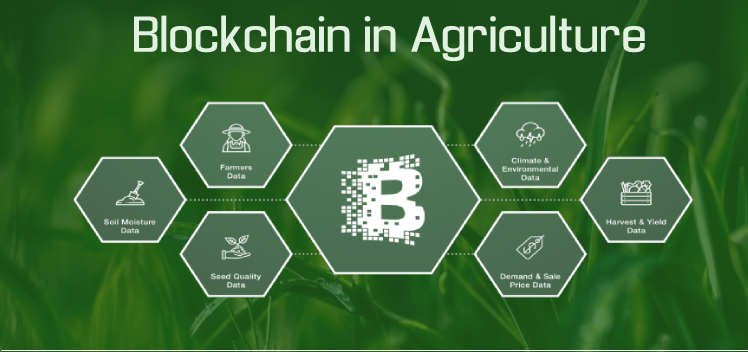
Traceability is frequently reduced to batch numbers or basic labeling information. Real traceability, however, encompasses the ability to track every relevant event in a product’s journey, including inputs, environmental conditions, processing steps, transportation, and storage.
By applying Blockchain in Agriculture, each of these events can be recorded as a verified transaction, creating a transparent and chronological chain of custody that is resistant to tampering.
Integration with Digital Technologies
Blockchain systems are most effective when combined with complementary technologies such as Internet of Things (IoT) sensors, RFID tags, QR codes, and satellite monitoring. Blockchain in agriculture these tools automate data collection and reduce reliance on manual reporting, improving both accuracy and efficiency.
For example, temperature sensors can automatically record storage conditions, while satellite data can verify land use and crop development. This information, once stored on the blockchain, becomes accessible to authorized stakeholders across the supply chain.
Value Creation Across the Agricultural Value Chain
Consumer Trust and Market Transparency
Consumers increasingly demand proof of sustainability, ethical sourcing, and product authenticity. Blockchain-based traceability allows buyers to verify claims related to organic certification, fair trade practices, geographic origin, and animal welfare.
This level of transparency strengthens brand credibility and helps differentiate products in competitive markets.
Food Safety and Risk Management
Food safety incidents can have severe economic and reputational consequences. Blockchain enables faster and more precise product recalls by identifying affected batches in real time. Blockchain in agriculture instead of recalling entire product lines, companies can isolate specific units, reducing waste and minimizing disruption.
Operational Efficiency and Automation
Blockchain can streamline operations by improving coordination among farmers, processors, distributors, and retailers. Smart contracts—self-executing agreements encoded on the blockchain—can automate transactions such as payments once predefined conditions are met.
This reduces administrative overhead, accelerates cash flow, and minimizes disputes between parties.
Empowering Farmers and Producers
Verified traceability provides farmers with documented proof of production practices and compliance. This can facilitate access to premium markets, export opportunities, and sustainability-linked incentives. For smallholders, digital records can improve visibility and bargaining power within the supply chain.
Blockchain in Agriculture and Sustainability Goals
Sustainability is a central concern for modern agriculture. Blockchain can support environmental goals by recording data related to water usage, soil management, emissions, and biodiversity indicators. These records provide measurable evidence of sustainable practices and support environmental certifications.
Transparent agricultural data also aligns with global frameworks promoted by international organizations such as the Food and Agriculture Organization (FAO) and the World Bank.
Adoption Challenges and Practical Barriers
Cost and Infrastructure Constraints
Implementing blockchain systems requires investment in digital infrastructure, hardware, software, and training. For many small and medium-sized farms, these costs represent a significant barrier to entry, particularly in regions with limited connectivity.
Data Reliability and Verification
While blockchain ensures that data cannot be altered after entry, it does not guarantee the accuracy of the initial data. Reliable data collection methods and verification protocols remain essential to prevent inaccurate or fraudulent information from being recorded.
Digital Skills and Knowledge Gaps
A lack of digital literacy among agricultural workers can slow adoption. Without targeted training and support, blockchain risks becoming a tool accessible only to large agribusinesses, exacerbating existing inequalities.
Interoperability and Regulatory Uncertainty
Agricultural supply chains often rely on multiple digital platforms and legacy systems. Ensuring interoperability between different blockchain networks and existing databases remains a technical challenge. Additionally, regulatory frameworks governing digital records and data ownership are still evolving in many regions.
Lessons from Real-World Implementations
Pilot projects across global food supply chains demonstrate that blockchain adoption is most successful when integrated into existing workflows and supported by clear governance structures blockchain in agriculture. Cooperative models, where farmers share infrastructure and technical resources, have shown particular promise in improving scalability and inclusivity.
Future Outlook
As digital infrastructure improves and implementation costs decline, blockchain adoption in agriculture is expected to grow. Future developments may include deeper integration with artificial intelligence, improved interoperability standards, and policy frameworks that support digital traceability.
Although blockchain is not a standalone solution, it can serve as a foundational component of resilient, transparent, and sustainable agricultural systems when applied strategically.
Blockchain offers agriculture a powerful mechanism to enhance traceability, build trust, and support sustainability objectives across global food systems. However, meaningful adoption requires addressing cost, data quality, digital skills, and regulatory challenges.
A balanced understanding of both the opportunities and limitations of Blockchain in Agriculture allows stakeholders to move beyond experimentation and toward long-term value creation. When implemented thoughtfully, blockchain can become a practical tool for strengthening agricultural resilience and transparency.
How to Increase the Resilience of Agricultural Systems to Extreme Events
Integrated Pest Management with a Preventive, Not Reactive, Approach

When Was Vertical Farming Invented? A Complete History of Vertical Agriculture
Cannabis HVAC Design: How to Build Efficient and Compliant Grow Facilities

Aeroponic Farming Systems: High-Efficiency Soilless Agriculture

Winemakers Are Building Grape-Picking Robots: How Automation Is Reshaping the Wine Industry
You might like...