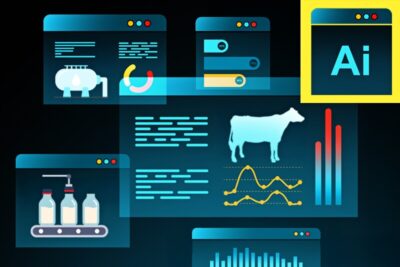
Data Management in the Dairy Industry: What to Measure and Why
The dairy industry is evolving rapidly under the pressure of rising production…
+
The dairy industry stands at the intersection of tradition and innovation — a sector that feeds billions while adapting to new environmental, ethical, and economic challenges. In this category, Gossort explores the evolution of livestock management practices, sustainability-driven dairy systems, and the technologies redefining animal agriculture worldwide.
Dairy farming contributes significantly to global food security and rural livelihoods. With over 150 million dairy farms globally, milk and dairy products provide essential nutrients such as calcium, protein, and vitamins for billions of people. However, the industry faces growing pressure to reduce its carbon footprint, enhance animal welfare, and maintain profitability amid fluctuating global markets.
In countries such as Russia, India, and New Zealand, dairy production is a key agricultural pillar. Gossort’s research and analysis aim to shed light on how these systems can remain resilient in a rapidly changing agricultural landscape.
Technological innovation is revolutionizing livestock management. From robotic milking systems to precision feeding and automated health monitoring, smart dairy farming integrates data, sensors, and artificial intelligence to improve efficiency and animal well-being.
Key advancements include:
These technologies improve efficiency, reduce waste, and enhance transparency — making dairy operations more competitive and sustainable.
Modern consumers increasingly demand ethically produced dairy. Animal welfare is no longer optional; it is integral to sustainability and brand credibility. Proper housing, stress-free environments, and access to veterinary care directly impact productivity and milk quality.
Organizations such as the World Organisation for Animal Health (WOAH) establish global welfare standards that promote humane practices and disease prevention. Gossort highlights how responsible dairy producers implement these standards through innovation and care.
Livestock feed production and methane emissions are among the most significant contributors to agriculture’s environmental footprint. Therefore, the path to sustainability includes optimizing diets, improving manure management, and adopting carbon-efficient practices.
Some leading solutions include:
Through these efforts, the dairy sector can balance productivity with ecological responsibility, contributing to global goals for sustainability and climate resilience.
Genetic improvement programs play a vital role in enhancing milk yield, disease resistance, and adaptability to climate stress. Selective breeding and genomic testing allow farmers to identify and propagate the best-performing animals efficiently.
Research in resilient breeds ensures that dairy herds can thrive in various environmental conditions. Combining traditional genetics with biotechnology paves the way for livestock that produce more with fewer resources — a key to future-proofing the dairy industry.
The dairy market is deeply intertwined with global trade and consumer behavior. Economic shifts, export policies, and changing diets all influence production patterns. For instance, rising demand for plant-based alternatives has prompted innovation in hybrid dairy products that combine traditional milk with plant proteins.
Meanwhile, emerging economies are investing heavily in cold-chain logistics and quality control to improve dairy export capacity. By analyzing these trends, Gossort provides readers with actionable insights into how market dynamics shape dairy sustainability worldwide.
Data analytics enables farmers to make better decisions about feeding, reproduction, and herd health. Digital tools not only increase productivity but also help track environmental metrics such as carbon output per liter of milk produced.
Integrated management software now connects farm operations with supply chains, enabling full traceability from “cow to consumer.” This transparency builds trust and ensures compliance with food safety and environmental regulations.
Despite technological advancements, dairy farmers face persistent challenges: fluctuating prices, climate risks, and the pressure to meet sustainability standards. The future of dairy depends on balancing innovation with inclusivity — ensuring smallholders can access modern tools and compete fairly.
Public-private partnerships, knowledge transfer, and responsible policy-making are crucial for building resilient dairy systems that serve both farmers and consumers in the decades to come.
The Dairy Industry & Livestock Management category at Gossort highlights how innovation, animal welfare, and sustainability converge to define the future of food. By embracing smarter technologies, ethical practices, and climate-conscious management, the dairy sector can continue to nourish humanity while protecting the planet.
Through expert insights, data-driven analysis, and industry updates, Gossort remains your trusted resource for understanding and improving the global dairy landscape.
The main challenges include reducing greenhouse gas emissions, managing waste efficiently, ensuring animal welfare, and improving resource efficiency.
Automation, sensors, and artificial intelligence are improving animal health monitoring, feeding precision, and productivity in modern dairy farms.
It refers to farming systems that integrate low-emission technologies, efficient water use, and resilient breeds to adapt to climate change sustainably.
Healthy, stress-free cows produce higher-quality milk and have longer lifespans, improving both productivity and farm profitability.
Genetic selection helps improve milk yield, fertility, and disease resistance, making dairy herds more efficient and resilient.
8 articles
Data Management in the Dairy Industry: What to Measure and Why
The dairy industry is evolving rapidly under the pressure of rising production…
+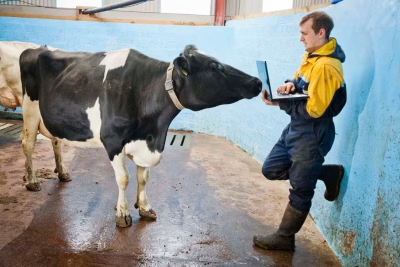
Wearable Technologies Applied to Livestock Management
Livestock production systems are undergoing a significant transformation driven by digital innovation.…
+
Vertical Farm Systems: Sustainable Indoor Agriculture
The global food system is undergoing a profound transformation. Population growth, climate…
+
Comparison Between Vertical and Traditional Farming to Ensure Urban Food Security
1. Introduction As global urbanization accelerates, ensuring food security within cities has…
+
Comparative Evaluation of Climate Change-Resistant Wheat Varieties in Eastern Europe
1. Introduction Wheat remains one of the most crucial staple crops in…
+
Integrating IoT Sensors into Grain Crops: Towards Agriculture
1. Introduction Over the last decade, agriculture has undergone a profound digital…
+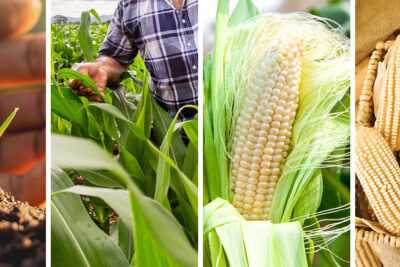
Precision Agriculture and Variable Corn Seeding Rates: The Smart Way to Farm
Introduction: The Rise of Precision Agriculture The 21st century has ushered in…
+
Russian Dairy Industry: Overcoming Import Substitution Hurdles in 2024 🧀🥛
Russian Dairy Industry: Overcoming Import Substitution Hurdles in 2024 🥛 The Russian…
+