
5 min read
In this article
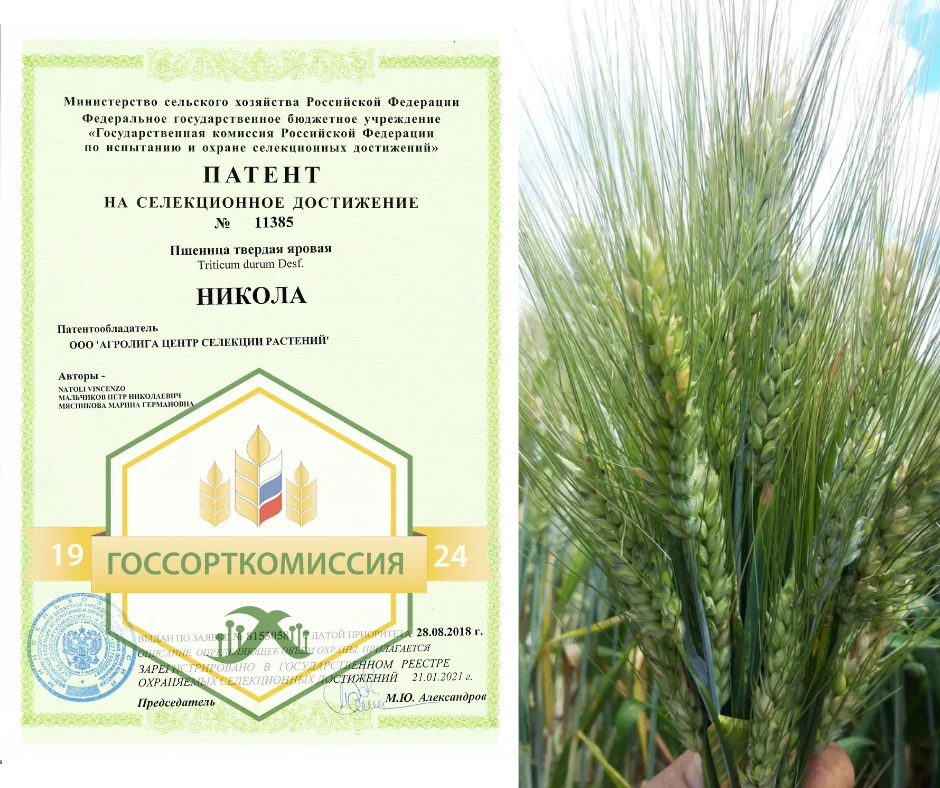
In Russia, wheat seed can be sold only after the variety passes two to three years of DUS and value-for-use trials and enters the State Register of Selection Achievements. The entry grants a registration number, admitted regions and yield ranges, and is the first check before buying or importing seed.
What the State Register of Selection Achievements Is
The State Register of Selection Achievements (Государственный реестр селекционных достижений) is Russia’s official list of plant varieties and animal breeds admitted for use. For wheat, admission means seed of that variety may legally be produced and sold in Russia. The register is maintained by the State Commission for Selection Achievements Testing and Protection, known as Gossortkomissiya. Each entry carries a registration number, crop, breeder information, year of registration, maturity group, and the regions where the variety is admitted. The public search portal at gossortrf.ru allows queries by name, crop, or registration number. Legally, a wheat variety absent from the register cannot be marketed as certified seed in Russia. For importers and seed buyers, the register is the first authority to check before a purchase. Admission also interacts with breeding goals for climate-resilient wheat varieties.
How a Wheat Variety Gets Registered in Russia
Registration follows a public procedure run by the State Commission for Selection Achievements Testing and Protection, not by the breeder alone. It proceeds in four steps.
- Filing and denomination. The applicant submits a technical questionnaire, a proposed denomination, and seed material to the commission. The filing must identify the crop and the proposed regions of use.
- DUS testing. The candidate variety is grown alongside reference varieties to verify distinctness, uniformity, and stability under the criteria published by the UPOV system. Distinctness separates the new variety from known varieties; uniformity confirms plants are similar; stability confirms traits remain unchanged after reproduction.
- Value-for-use trials. Over two to three years, the variety is tested for yield, quality, and disease response in the regions where admission is requested. Winter wheat and spring wheat cycles can shift exact timing, but the full trial period remains a multiyear requirement. These results become part of the economics tracked in wheat production economics in 2025.
- Decision and entry. If the trials support admission, the commission admits the variety for use in the requested regions, assigns a registration number, and publishes the entry in the State Register. Admission can be region-specific; a variety cleared for one federal district is not automatically cleared elsewhere.
How to Read a Registry Entry: Fields Table
Before buying seed, confirm each field against the official entry. The table explains what each field identifies and what to check.
| Field | What it identifies | What to confirm |
|---|---|---|
| Registration number | Unique identifier for the entry in the State Register | Number matches the variety and crop in official search |
| Variety name | Approved denomination of the cultivar | Name matches seed documents exactly |
| Crop | Wheat species and growth habit, such as winter wheat | Species matches intended planting |
| Origin/breeder | Applicant or institution that developed the variety | Origin is traceable, not a quality guarantee |
| Year of registration | Year the variety was admitted for use | Check latest record because admissions can be updated |
| Region of admission | Districts where seed can legally be sold and used | Covers the intended production area |
| Maturity group | Growing-season classification | Group fits local season length |
| Yield (t/ha) | Yield range from official trials | Treat as trial result, not guaranteed farm performance |
For example, a registration number such as 9908465 identifies an entry, not the cultivar's traits. None of these fields should be read as a farm performance guarantee. High trial yield still depends on season, management, and soil conditions; yield-focused cereal technologies covers some of those variables. Official records may appear in Russian, so use the field order and crop code rather than a translated caption when cross-checking.
Registration Number 9908465 as a Worked Example
A registration number is a database identifier, not agronomic data. The string 9908465 by itself says only that a selection achievement has an entry in the State Register; it does not describe the variety’s yield, disease resistance, or origin. To use the number, open the official search portal and enter 9908465 in the registration-number field. The returned record should confirm the variety name, crop, applicant, year of registration, and admitted regions. The number should not be mistaken for a seed lot code: two batches of the same variety carry the same registration number, while a different variety carries a different one. If a supplier lists 9908465 but the official entry shows a different crop or name, that mismatch is a red flag. Field-level decisions for that variety belong in a wheat crop management guide. The same sort code can appear in separate crop-specific records, so check the crop field before assuming a wheat match. Registration numbers are also not permanent guarantees; a variety's admitted regions can change over time, so a fresh official query is the safest way to confirm current status.
Breeder’s Right and Plant Variety Protection
Plant variety protection separates the protected variety from the grain it produces. A breeder’s right allows the holder to control propagating material of the variety, not the harvested grain. Under the UPOV 1991 Act, the term of protection is 35 years. This right is separate from State Register admission. A variety can be admitted for use without being protected, and a protected variety can lose its admission region or be removed from the register. For buyers, registration answers whether seed can legally be sold; plant variety protection answers who may produce and sell propagating material. Soil management for wheat is a separate field-level question. Registration therefore does not automatically give the buyer the right to reproduce seed for sale, and it does not transfer the breeder’s right with the seed purchase. The registry entry and the PVP certificate are two different documents.
Where to Check the State Register
Use the official State Register search portal operated by Gossortkomissiya. Search by registration number, crop, or variety name. Confirm the crop, year, region of admission, and applicant against the seed documents. Check the latest record because admission regions and variety status can change after initial registration. The official registry record, not a reseller summary, is the record to consult before purchase. Seed buyers and importers can run this check in a few minutes once they have the registration number or the approved variety name.
FAQ
Is variety registration mandatory for wheat seed in Russia?
Yes. A wheat variety must be listed in the State Register of Selection Achievements before its seed can be legally sold in Russia.
How long does Russian wheat variety registration take?
Typically two to three years of DUS and value-for-use trials, depending on crop cycle and admission region.
Can a foreign wheat variety enter the Russian register?
Yes, if it passes DUS and value-for-use trials in the relevant admission regions.
What does a Russian wheat registration number tell you?
It identifies the entry in the State Register, not the characteristics of the cultivar or the seed lot.
Sources
State Register of Selection Achievements of the Russian Federation, Gossortkomissiya. UPOV 1991 Act, International Union for the Protection of New Varieties of Plants.
Keep reading